


GMC or Chevy? Is There A Difference?

If you are shopping for used trucks, you might be comparing the GMC Sierra and the Chevy Silverado, or the GMC Canyon and the Chevy Colorado, and find yourself wondering, are GMC and Chevy the same thing? After all, these vehicles seem rather similar. And where does GM fit into all of this? The short answer to these questions is that no, GMC and Chevy are not the same things.
However, GMC and Chevy are both divisions of GM and share their basic truck designs and most of their technology. Whether you buy a used GMC Sierra or a Chevy Silverado, a GMC Canyon, or a Chevy Colorado, you will be getting the same chassis and engine but with a different look and feel and often a different feature set. But to understand the whole story behind why GM has two different branches producing remarkably similar trucks, you will have to travel back in time to over a century ago and take a look at the early history of GM, GMC, and Chevy.
In the Beginning
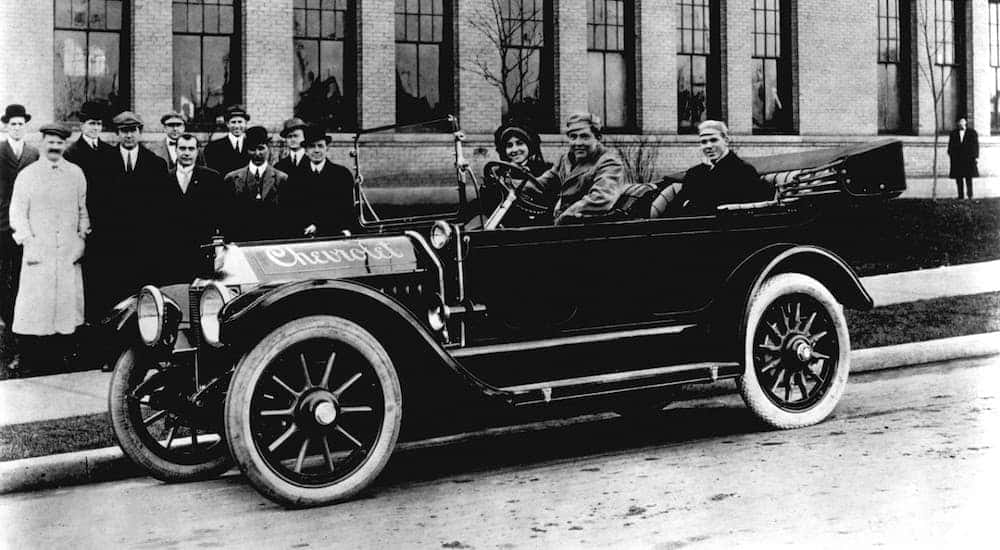
The early 1900s was a boom time for automobile companies. Automobile technology was brand new, and countless inventors and engineers were starting small businesses in the hope of making it big. However, among these businesses, there were also many failures, and even some companies with good products lacked the money or business sense needed to succeed. Enter the industrialist William Durant, the founder of GM. Durant was a highly successful businessman who had made a fortune in the late 1800’s building horse-drawn wagons and carriages and owned Durant-Dort Carriage Company, the largest wagon manufacturer in the United States. He had no knowledge of automobiles and initially did not believe the technology would work. Still, Durant was a good businessman and eventually understood that cars were going to be the future of transportation.
In 1904, Durant invested in the Buick Motor Company and quickly turned this failing business around, making one of the largest automobile manufacturers in the United States. A few years later, in 1908, Durant took the first step in expanding his automobile empire by purchasing the popular manufacturer Oldsmobile. But unlike other industrialists who simply folded their new acquisitions into their existing company, Durant had a different idea and founded the General Motors Company as a holding company for his two automobile manufacturers. This allowed Buick and Oldsmobile to remain independent and continue building and improving their existing product lines. Over the next two years, GM bought more automobile companies at an astounding rate, adding seven more manufacturers to the fold. Two of these acquisitions, the Rapid Motor Vehicle Company and the Reliance Motor Car company, built trucks, and in 1911 they were combined to form the new General Motors Truck Company or GMC.
However, in 1910, Durant pushed too far. His failed attempt to buy out the Ford Motor Company, combined with the mounting debt incurred during his previous buying spree, resulted in his being forced out of GM by his shareholders. Undeterred by this setback, the next year, Durant partnered with the Swiss engineer and race car driver Louis Chevrolet to found the Chevrolet Motor Company. This new company quickly became another runaway success and gave Durant the money and support he needed to take back the leadership of GM in 1916. Chevy soon became another member of the GM group, making up the bulk of its sales. But while Chevy succeeded, Durant did not and was quickly forced out of GM for a second time. Although he again tried to return, this time, his attempt failed, and his new automobile company, Durant Motors, was eventually forced to close its doors in the 1930s. Still, while Durant was only involved in the early years of GM, his legacy lived on, and the company continued to be structured as a loose collection of independent manufacturers that competed against each other as much as they did with other manufacturers. This basic principle was taken even further by Durant’s successor, Alfred Sloan, who introduced the idea of having each independent company target a different market segment.
Back to the Present
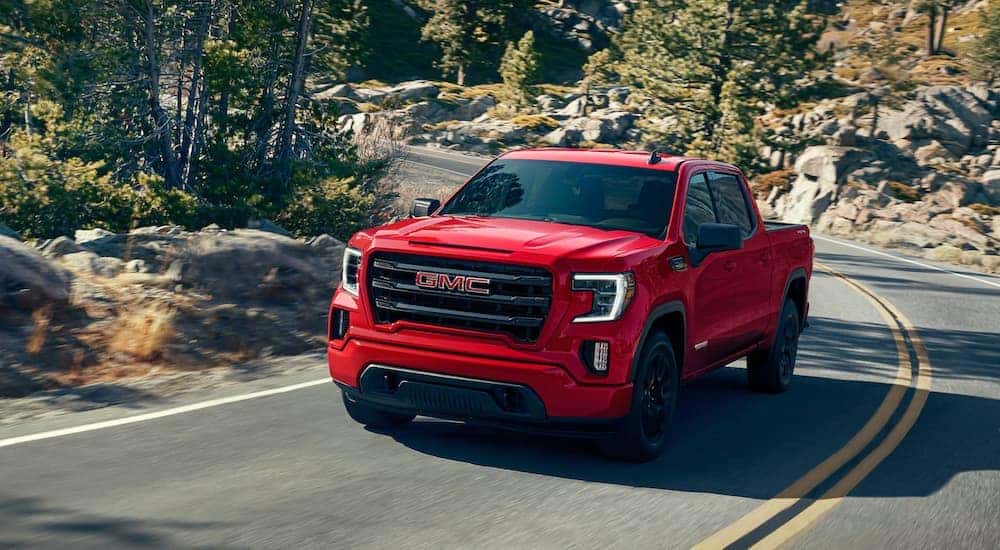
But how does this history affect today’s used truck market? Well, since the introduction of Sloan’s business model, GMC and Chevy have shared many of their truck designs with each company independently modifying the same primary platforms to fit their own market niche better. Traditionally, Chevy was seen as an affordable entry-level product, while GMC offered upmarket and commercial-grade trucks. Today that is still true to some degree, but the overall differences in price and features between the two have shrunk. Instead, the difference between GMC and Chevy is now more a matter of style. Chevy usually offers simpler and more adventurous trucks, while GMC vehicles generally sport additional features and a more classic look. In a concrete example of how these differences play out, let us look at two highly popular used trucks from these manufacturers – the third-generation Chevy Silverado and the fourth generation GMC Sierra.
Despite the difference in generation numbers, these two trucks were built to the same basic design and were first released for the 2014 model year. Although they have recently been phased out in favor of newer designs, these two trucks are widely available on the used market. Like nearly all GMC and Chevy products, the third generation Chevy Silverado and fourth-generation GMC Sierra shared a common chassis and offered the same engines. However, inside and out, the Silverado and Sierra provided somewhat different experiences. The first thing that you will notice is the exterior styling. While the Chevy Silverado made use of thick angular lines for an aggressive, no-nonsense look, the GMC Sierra offered a more coordinated design suggesting upscale refinement. On the inside, there were fewer cosmetic differences between the two trucks, but there were several different features. While the precise changes in available equipment varied from year to year, common upgrades on the GMC Sierra over the Chevy Silverado included tie-down points, LED lighting, and improved infotainment.
The best way to see the differences in these two trucks is to compare their top trims, the Chevy Silverado High Country and the GMC Sierra Denali. With its signature chrome mesh grille and a plethora of luxury features, the Denali was the ultimate in GMC trucks. It demonstrates the GMC market image of a successful professional truck. While a fully-equipped Silverado High Country does not fall far behind the Denali in luxury, many of its features were options rather than standard equipment, and its more subtle styling presented a more rough and ready image. In a particularly noteworthy example of how these two trims differed, the Denali came standard with a 6.2L V8 engine while the High Country was also sold with a less powerful 5.3L V6. These basics hold true of comparing any GMC and Chevy truck from the same generation, while they will share the same primary platform, performance, and even many of the same features, they are still products of different GM divisions and will tailor their vehicles to fit their own market segments.
Rick Hendrick Buick GMC Duluth
While you will not go wrong buying a used truck from either brand, GMC and Chevy are not the same things, and you will likely be happier with one from the brand that fits your needs and tastes more closely. If you think that a GMC truck is better fitting for your lifestyle, visit us at Rick Hendrick Buick GMC in Duluth, GA. We will help you find the best used GMC truck for your wants, budget, and life. There is no way you will walk away unhappy if you visit us at Rick Hendrick.
0 comment(s) so far on GMC or Chevy? Is There A Difference?